CHICAGO- The week before classes always feels strange, not just for DePaul students, but for everyone. It’s a rush to get organized, while also squeezing in those last-minute hangouts before school nights take over. For me, though, that week meant catching a show.
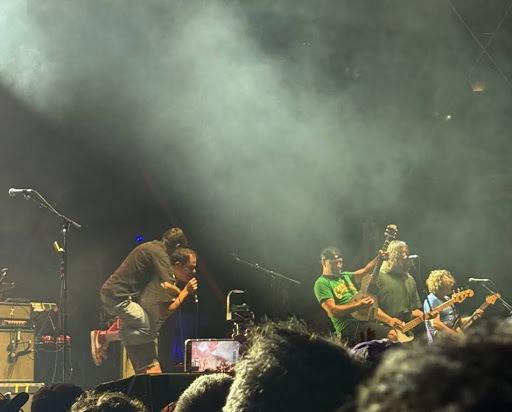
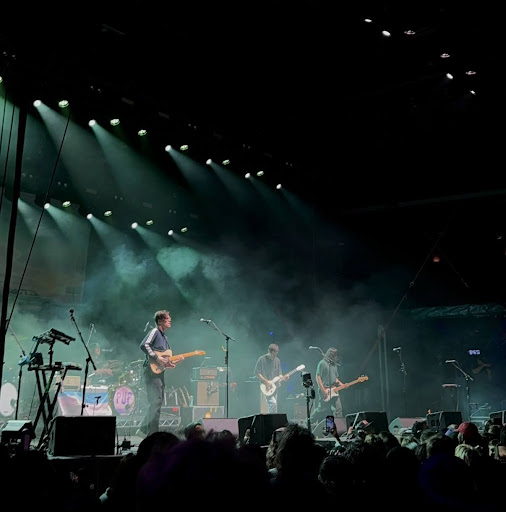
When I heard Jeff Rosenstock and PUP (Pathetic Use Of Potential) were teaming up for a joint tour, it felt like a punk dream I couldn’t pass up. On a late summer night, the Salt Shed was packed wall-to-wall with fans for the “A Cataclysmic Rapture of Friendshipness” tour, a night overflowing with political energy, chaotic fun, and pure punk rock spirit.
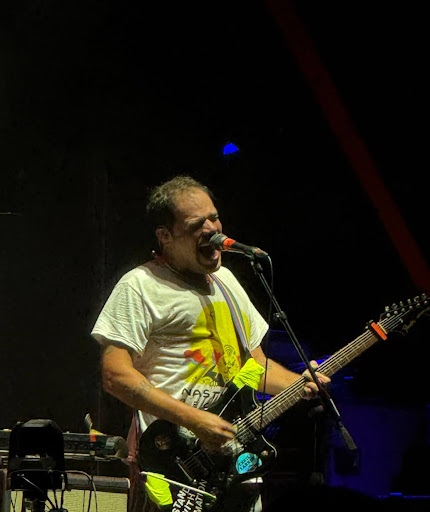
Ekko Astral opened the show playing iconic songs as well as some unreleased, such as “The Beltway Is Burning” and “Capitol Riot.” Then Rosenstock took the stage, and his setup instantly caught my eye. It was everything you’d expect from Rosenstock, unapologetically bold and chaotic in the best way. A rainbow flag with cannabis leaves surrounding a “666” backed Rosenstock and his band, creating a backdrop that was as striking as it was symbolic. Equal parts rebellious, beautiful, and powerful.
He started his show with an older song called “The Lows.” Rosenstock claimed that this one was the “first time in 10 years” as it was the first time being performed since Feb. 8 2019. After this, he tore into the classics that everyone knows, “Nausea,” “Pietro, 60 Years Old,” even “I Did Something Weird Last Night.” Fans hopped over each other in crowd surfing battles, and the mosh pits were endless. The energy seemed to crackle through the entire venue. At one point, Rosenstock snatched a doll from an eager fan in the front row, laughing, “Well, that was worth it.”
Amid the chaotic pulse of “HELLLLHOOOOLE,” Rosenstock paused and asked the crowd if “she said yes” insinuating a possible proposal… silence followed. A ripple of awkward laughter swept through the venue before Rosenstock shrugged off the tension and dove right back into the set.
One of the most beautiful moments of the show in my opinion was when Rosenstock broke out in “9/10.” Watching the crowd take a quick intermission from their moshing to band together and swing their arms back and forth reminded me of the power of music and connection. Despite Rosenstock’s usual hardcore music, this song marked a pause, before jumping right back into the chaos with “You, In Weird Cities.”
Post Rosenstock set called for a brief intermission, and then PUP came out screaming (literally.) PUP’s lead singer Stefan Babcock launched into “No Hope” and “My Life Is Over And I Couldn’t Be Happer.” He spent a lot of the show reflecting on how the band wrote five records all based on existential dread. Yet, despite the heaviness in these tracks, the crowd found connection in the raw honesty. Babcock also reminded fans that “the world sucks right now – but the whole point of being here is to make others feel good and practice empathy.”
With that, they jumped back into their tuneful punk set. “Concrete” and “Morbid Stuff” had concertgoers putting their hands up and jumping. However, before “If This Tour Doesn’t Kill You, I Will” he mentioned that the Great Lakes is the only place where you’ll see someone apologize to security for pulling them over the barricade.
For the finale, the two acts combined forces and joined together for a few closing songs. The crowd began to chant “double band” repeatedly. They performed “Shut Up,” “Hey Allison!” and many more together, making it a point to jump on each other’s backs and run around the stage repeatedly. The night wrapped with an unexpected but unforgettable cover of the Spice Girls’ “Wannabe,” the perfect capstone to a show defined by connection, friendship, and the unshakable spirit of the punk community.
Walking out of the Salt Shed, I couldn’t help but feel grateful that my pre–first-week-of-classes stress had pushed me into this night – one I’ll remember long after the quarter begins.
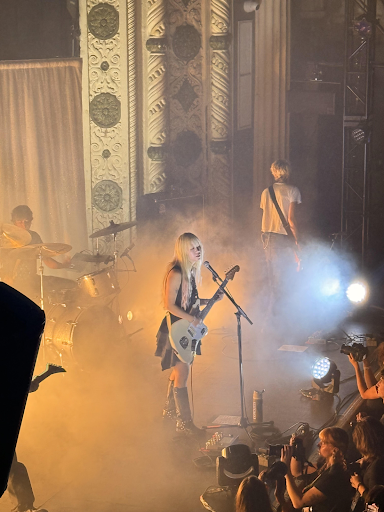
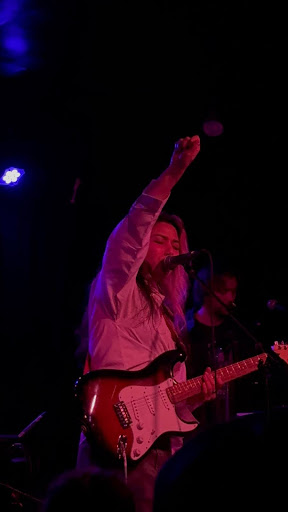
CHICAGO- On Sept. 10th 2025, Wisp with opening musicians Dream, Ivory and aldn performed at Metro in Chicago. Metro is an intimate and independent historical venue which provided the perfect ambiance and community space for a magical Wednesday night show. Wisp is a California-based group as well as an up-and-coming band in the genres of alternative rock and nu-gaze. They are currently on a headlining tour for their debut studio album “If Not Winter” as well as stopping to support other headliners at shows for Korn, System of a Down, and Deftones.
The lead, Natalie R. Lu, mostly sang music from their new album “If Not Winter” which was released in Aug. 2025. At the show, they performed their first live cover of “Yellow” by Coldplay. The recorded studio cover was released that same day. She also performed the title track of her debut EP, “Pandora,” that was released in April 2024.
They closed out with her debut single “Your Face”which was released on TikTok in April 2023, where it had 100,000 views in a single day. The song’s streaming numbers are currently around 150 million on Spotify alone. Lu’s social media reached millions of views while “Your Face” met with similar streaming numbers which opened up large opportunities like being signed to her label Interscope Records.
The official music video for “Your Face” was released in November 2023 with Boni Mata and Nick Vernet directing. The video takes place underwater with the cinematic visual appeal of clothed bodies swimming and was directed intentionally to avoid actors’ faces. The YouTube music video currently has 9 million views. Her many other music videos carry unique visuals which emphasize the songs storytelling, the songs’ pop elements, and the bands genre-merging abilities.
Overall, Wisps performance was mesmerizing and a digestible listen for those new to the nu-gaze. Their stage presence, amazing openers, a brand new release, and kind co-attendees made this concert memorable and solidified their spot on my personal list of new artists to look out for. Thank you Radio DePaul for sending me to the show and thank you to the Wisp team and Metro staff/security.
CHICAGO- Riot Fest 2025 went down in Douglass Park the weekend of September 19th and had many highlights like the Beach Boys taking the stage with John Stamos, Jack White ripping a solo set, or the return of Blink-182. However, one of its brightest aspects was the spotlight it put on the rapidly growing genre of modern hardcore punk.
Riot Fest has previously showcased contemporary hardcore punk bands in the past few years, featuring the crossover thrash band Drain in 2023 and Bay Area Beatdown mainstays Sunami in 2024. However, in 2025, they took the spotlight to the next level, moving the contemporary hardcore focus from the side stage in the early afternoon to the main stage at prime time, which was amazing to see.
Hardcore as a genre is growing rapidly due to the contributions of bands like Knocked Loose and Harms Way, who are consistently touring and spreading the genre. Whether it be the main stage of Riot Fest or touring local venues, elevating the bands they play with, like Fleshwater, Ingrown, and Militarie Gun (who also played Riot this year). Bigger hardcore bands can use their influence to put the spotlight on other bands in their genre, which creates the sense of community that hardcore is known for.
Seeing hardcore take the main stage at a Chicago institution, the level of Riot Fest, was amazing to see, as it showcases the growth of the hardcore scene, especially in Chicago, where Harms Way is local. Additionally, hardcore bands getting the spotlight at Riot paves the way for other modern and newer artists to gain attention from the industry.
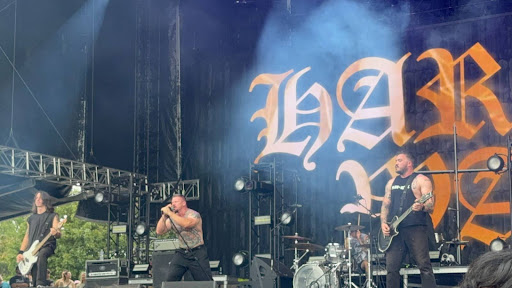
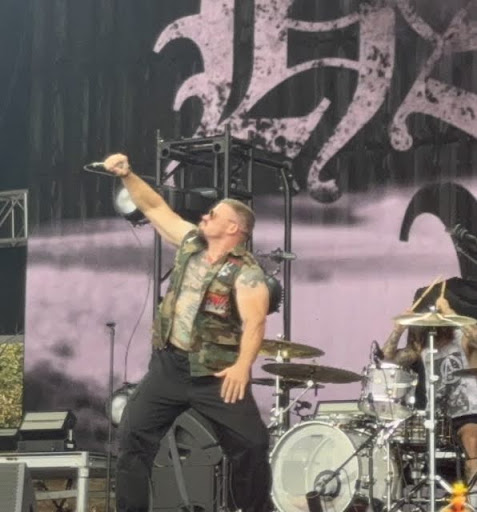
Harms Way was on at the main Roots stage at 3:45 PM, which was when the crowd really began to gather for the first day of the festival. Harms Way is coming off their most recent LP release, the phenomenal “Common Suffering,” from September 2023. The album features metal-influenced hardcore cuts such as “Silent Wolf” and “Terrorizer,” which they played during the set. Harms Way’s stage presence is defined by lead singer James Pligge’s captivating stage presence as he is laser-focused on his devastating vocal delivery. Pligge uses a very unique but effective style of hardcore vocals, as he is using his guttural force to rip through his vocal passages. The Riot Fest set opened with “Human Carrying Capacity” off of their phenomenal 2018 release “Posthuman.”
A defining trait of the band has always been their locked-in groove. Their sound balances between exhibiting rhythmic power and giving great spacing quite well. The band stands uniquely for the way they have mixed their original influence of bands like Weekend Nachos, who leaned towards faster and sludgier styles of distortion, and other Straight Edge hardcore bands like Foundation, who had similarly organized rhythmically driven pacing.
Live, Harms Way reaches a captivating pace with the riffs of founding guitarist Bo Lueders driving the speed and power of the band. The band is consistently in sync as they rapidly switch between rhythmic pacing with a dynamic focus. The band is also fantastic at slowing down the pace into breakdowns, which take the main motif of the riff and brutalize the pacing, sending every hardcore fan into the mosh pit. Harms Way can consistently make a slower pace sound brutal and heavy with the strength of rhythm they contain, which really makes them unique among hardcore bands. The rhythmic versatility of the band’s live performance is a testament to how tenured they have been for the last decade in the world of hardcore.
“To see them take the main stage at Riot Fest and show how they have elevated Chicago’s hardcore scene by being one of the most popular and tenured bands from the city’s scene was just another reason why they are so amazing to watch. Harms Way was even added late to the festival, which was a great booking choice from Riot Fest’s team, as it gave the city’s hardcore scene a genuine band to be excited for.
Harms Way’s set also consisted of a brand new single, “Other World,”from May 2025, which is a great new sound for the band, though still rooted in the industrial hardcore style they are known for. Their use of noise sampling has always been great to add the industrial effect to their music, and the riffs on “Other World” are great, with a finale-style breakdown to end the track. This track really brought the energy to the mosh pit with its consistent rhythmic focus and grand breakdown.
The band closed their main stage set with “Becomea Machine,” also from 2018’s “PostHuman,” which has become a set mainstay for the band over the years due to its iconic riffs and Pligge’s vocal delivery. “Become a Machine” is a phenomenal closer for the band as it is another great example of their rhythmic timing and consistent ability to crush with their dynamics.
Overall, this was a fantastic showcase set from one of Chicago’s premier hardcore bands, where they played hits from their career so far. In playing one of Chicago’s only left festival institutions, Harms Way has brought hardcore to the main stage in a genuine and effective way that will elevate the amount of eyes on the genre as it continues to grow rapidly.
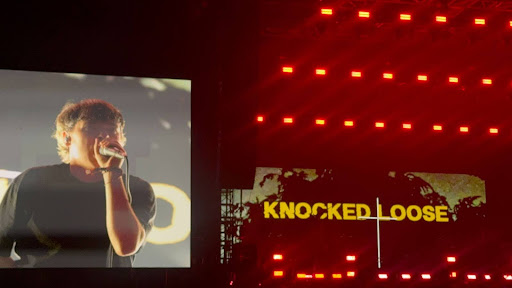
Knocked Loose took the Roots stage at 7:25 PM for the co-headliner set, which was also their very first Riot Fest show. Lead singer Bryan Garris talked on stage about how Chicago was a “second home” to the band, as it is the largest city in proximity to their hometown of Louisville, Kentucky. So it was a dream come true for them to play the institutional Riot Fest. Knocked Loose has been active with their brand of metalcore for over a decade, but recently off their 2024 release “You Won’t Go Before You’re Supposed To,” their popularity has grown with a huge surge, which is very well deserved for the band. Knocked Loose has been hard at work since their inception, touring and refining their sound, which has made co-headliner sets like this possible. They have also played bills with bands like Slayer, which they immediately followed the day after at Hersheypark.
“You Won’t Go Before You’re Supposed To” was a definite refinement in sound for the band as they took the next level in sonic focus to create a truly special album. While their previous release, 2019’s “A Different Shade of Blue,” was truly great hardcore, it felt like the band took a step up in versatility and creativity that was unique. Their Riot Fest set started with the scathingly aggressive track “Blinding Faith”off of their most recent LP release. The band’s sonics are strongly defined by lead guitarist Isaac Hale, who brings constant innovation to his guitar playing with how heavy he can get while still reigning in a genuine sense of songwriting and rhythmic cohesion.
The band is defined by brutal and devastating riffs from both Hale and rhythm guitarist Nicko Calderon, who joined the band in 2020. Knocked Loose stands uniquely in the hardcore genre due to their ability to take devastating riffs and bring a true sense of melodic rhythm, complementing singer Bryan Garris’s intense vocal attack. The true hybrid ability of the band is what defines highlights of their live set, such as Belleville and Deep in the Willow, whose balance of brutality and rhythmic focus makes for an insane feeling in a live setting.
Through years of consistent touring, the band has accumulated an imposing stage presence, especially when it comes to playing in smaller venues, like when they took Chicago’s famous local venue, the Metro’s stage, in 2021. The band has not always been playing Festival co-headliners, as they had to work through touring their own way for years before gaining traction outside of the hardcore community. Through this, they gained a genuine sense of stage presence even when it comes to huge venues like Riot Fest.
Knocked Loose has also been consistently supporting the hardcore genre as a whole, as they are very active in their local scene of Louisville, where LDB fest takes place, supported by Life and Death Brigade records. Through consistent support of the community, Knocked Loose puts more eyes on the community of hardcore through playing at larger festivals like Riot. Their set was great to witness as a fan of hardcore, as they played a mix of songs throughout their early career as well such as “Deadringer”and “Billy No Mates.” Their ability to be consistent and hardworking has elevated the community of hardcore that has greatly influenced their sound.
The band’s live energy is consistently top-notch as the riffs are often seen sending large crowds into the mosh pit. Riot Fest was also made into a gigantic mosh pit at the end of their set with the breakdown to their track “Everything is Quiet Now.” It is truly special to see that many people dance to the same music regardless of whether they are from a hardcore background or not.
Knocked Loose bridges the gap between the mainstream and the hardcore community really well in large settings, as their music is made accessible by their melodic focus to be able to demand attention from double-digit crowds . Knocked Loose was absolutely a highlight of this year’s Riot Fest, and the genre of hardcore got a ton of new eyes from them taking the main stage over in such a grand fashion.
CHICAGO- Growing up in a very rock and roll oriented household, I was always familiar with The Who, and always liked them. I have fond memories of jamming to “Pinball Wizard” on Rock Band 2, strumming on my Wii guitaras best as my seven-year-old self could. But it wasn’t until I caught the 1975 film adaptation of their 1969 album “Tommy”on TCM that I truly realized how much I loved the band and recognized their genius.
Being a British band from the ‘60s, they automatically get mentioned alongside the Beatles and the Stones, but no band was really doing what they were. They were more outwardly rebellious, with all the guitar smashing and fireworks hidden in bass drums and the heavy proto-metal sound of “Live at Leeds.” But they were also deeply vulnerable and reflective in their lyrics, and lent voices to troubled youth on albums like “Tommy”and “Quadrophenia.” Even decades on from the release of those albums, their music still strikes a chord, and I was so honored to get the chance to see them when they came to the United Center on Sunday, September 7 for their farewell tour.
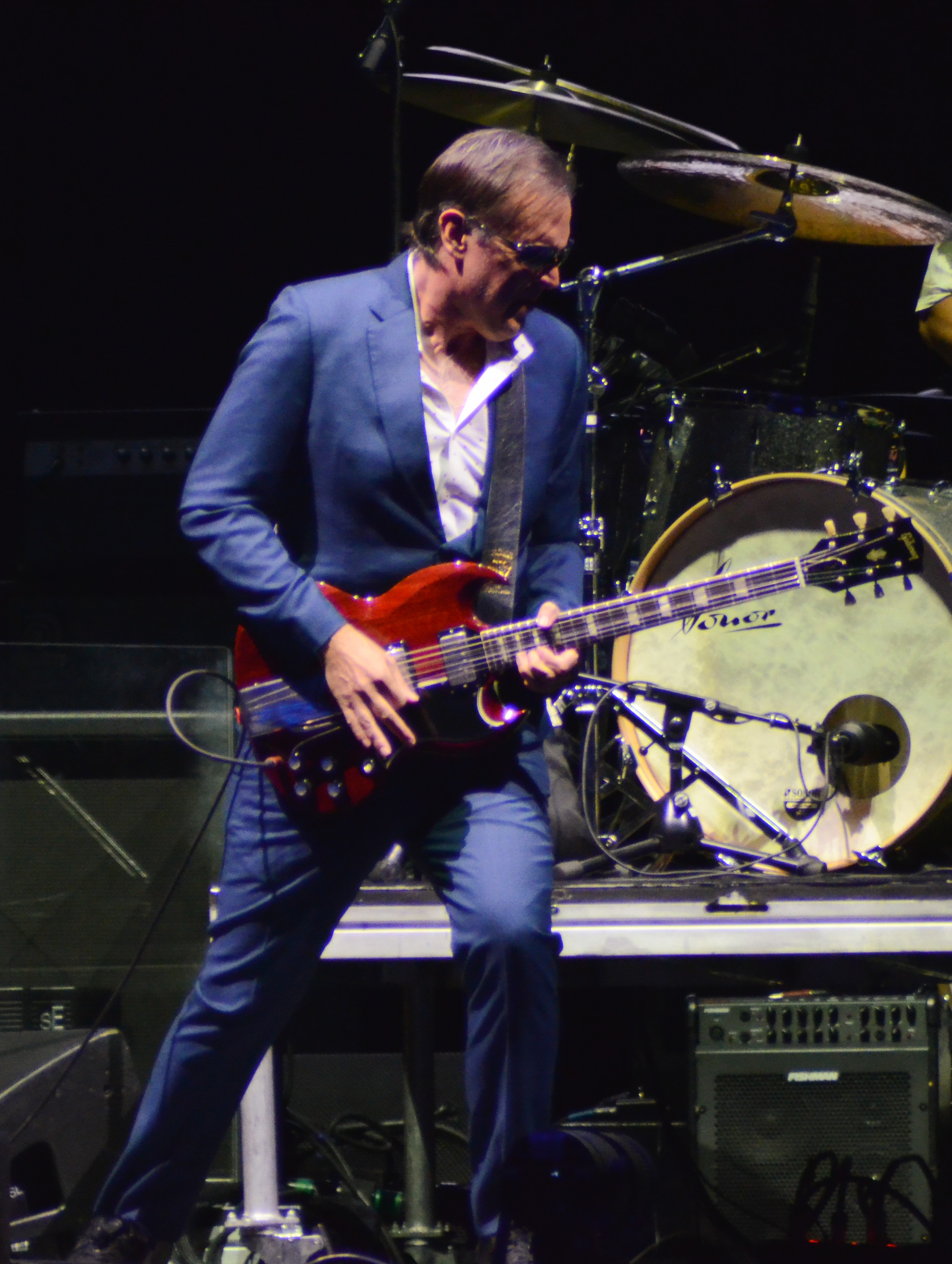
The colors of the Union Jack were a common sight walking around the venue, as excited concertgoers filed into their seats to see the legendary band one last time. After opening act Joe Bonamassa, who warmed up the crowd with his virtuosic blues-rock guitar, the screen displayed a tribute to original Who drummer Keith Moon, as the night marked the 47th anniversary of his death. This nod to Moon got a huge response from the crowd, as many of us fell in love with the band because of the incredibly unique and intense style of playing he brought to their music. It added more poignancy to an already bittersweet evening.
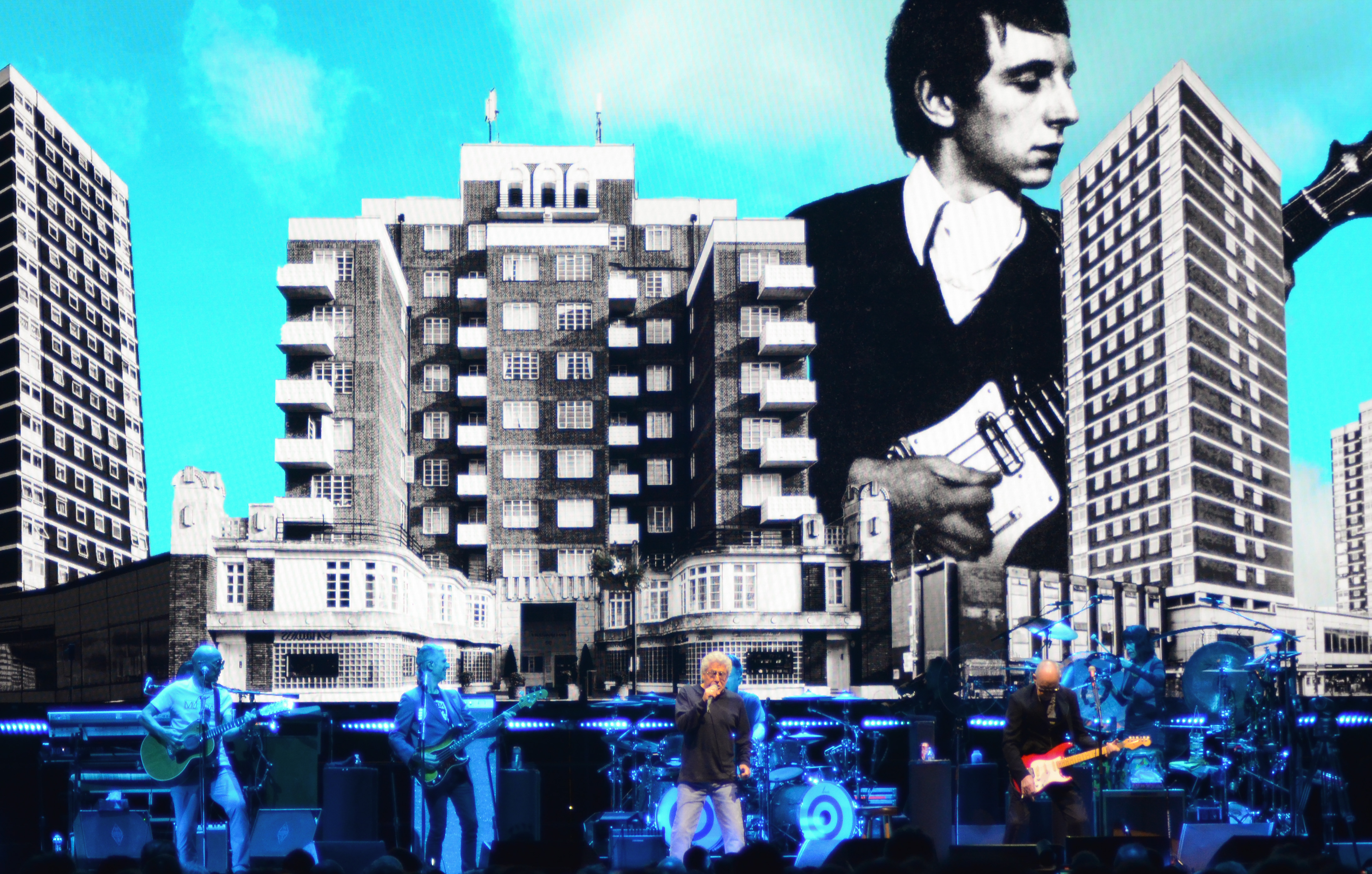
Soon after, the band came on stage and fired right into 1964’s “I Can’t Explain,” Pete Townshend’s simple but striking riff immediately energizing the crowd. Then came another track from their earlier days, “Substitute,” before they went into 1978’s “Who Are You” and its infectious “who-who, who-who” chorus. The screens behind the band displayed photos of the group in their earlier days against dynamic backdrops, including one where original bassist John Entwistle, who passed in 2002, towered over a cityscape. While Daltrey and Townshend played on with new members, they certainly did not let Entwistle and Moon be forgotten.
Two more heavy hitters came with “The Seeker” and “Long Live Rock,” the latter of which was welcomed as it just confirmed what we were all feeling; that rock and roll was alive tonight. Next came two tracks off 1969’s “Tommy,” “Pinball Wizard” right into “See Me, Feel Me,” a personal favorite that I was especially glad to hear as it was the song that reignited my love for their music.
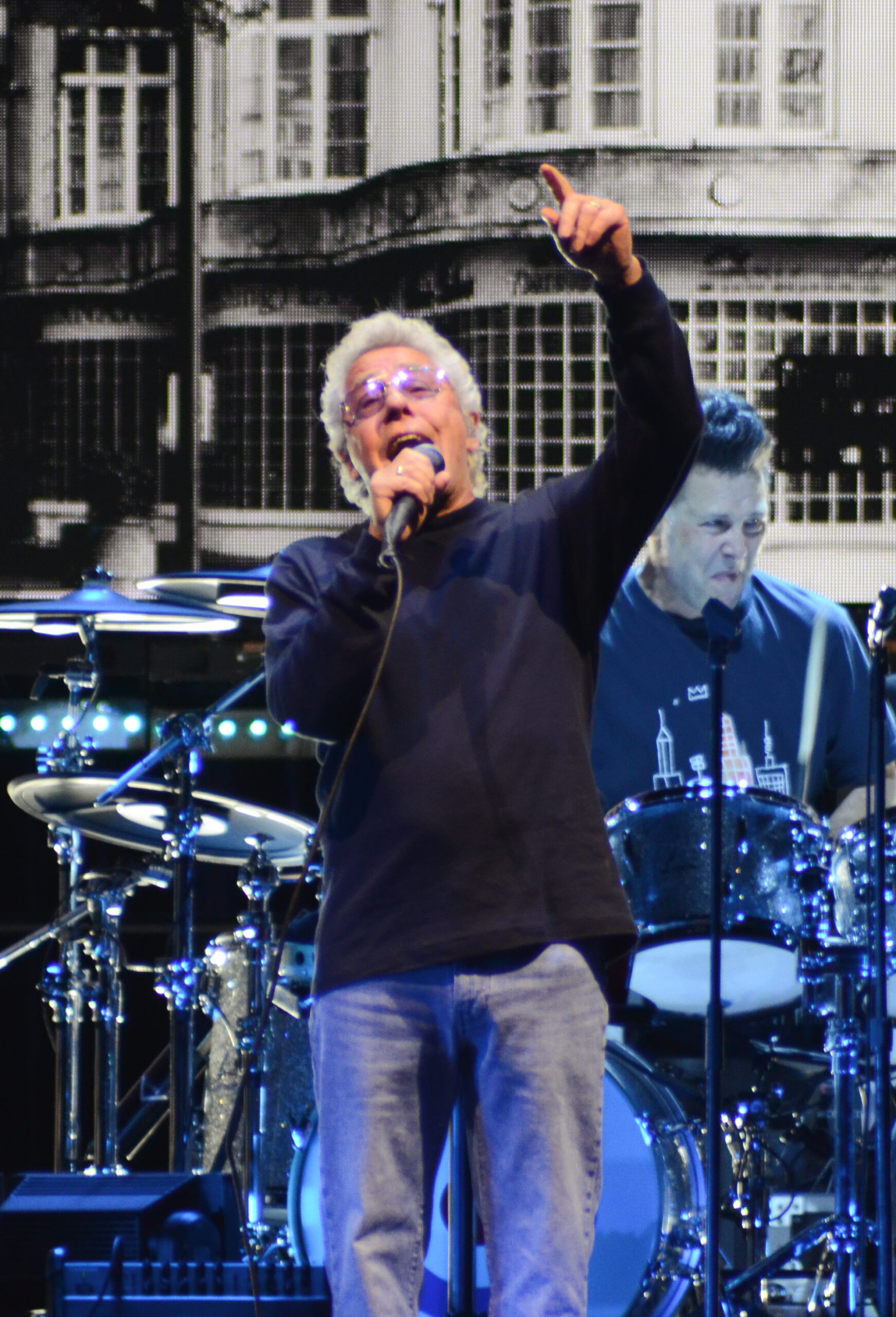
Roger Daltrey, at 81 years old, was in especially fantastic voice, hitting notes just as he did decades ago. His vocals particularly stood out to me on “Love Ain’t For Keeping,” a hard song for anyone to sing, much less an 81 year old. It was incredible to hear such a singular voice in top form.
After a beautiful “Behind Blue Eyes,” the setlist then jumped back and forth between decades, going from the funky “Eminence Front” into the era-defining “My Generation.” The energy continued with “You Better You Bet” into “Going Mobile,” the latter of which saw Townshend’s brother Simon taking the lead vocal part.
The night wasn’t without a couple of bumps, mostly due to troubles with equipment, all of which they handled quickly and with humor. Townshend joked that, “on a night when we continually f— things up, you should pay extra.” Moments like that made it even more special, as they didn’t let those hiccups derail the show but rather embraced them and gave us some laughs in between screaming the lyrics. Rock in its most purest form.
Next came a medley of songs from 1973’s “Quadrophenia,” “The Real Me,” “I’m One,” “5:15,” and a very special “Love, Reign o’er Me,” which brought the house down. Daltrey attempted the final note a couple of times, saying “not tonight” and “it’s only rock and roll” between tries before hitting it perfectly, bringing the whole audience to their feet and sparking thunderous applause throughout the arena.
Even after the Olympic level vocals required to do that, Daltrey wasn’t done, as they went right into “Won’t Get Fooled Again,” which contains probably the most legendary scream in all of rock and roll. Even if you don’t really know The Who, you know that “yeaaaahhh!” Once again, Daltrey nailed it and the crowd rightfully went wild.
The “Who’s Next” run continued with “Baba O’Riley,” for which guest violinist Katie Jacoby came out to play the iconic part in the frenetic ending of the song. Jacoby was a real highlight, and Daltrey and Townshend seemed especially delighted watching her bring that energy from the original record to a live setting.
Next came “The Song is Over,” the namesake of the whole tour. This song summed up the night perfectly, as it represents The Who at their best, combining all of their angst and all of their tenderness into one song, a gorgeous ballad that erupts into a powerful anthem. Here, Daltrey changed a couple of lines to reflect the farewell tour, singing “my love’s not over; you’re all ahead now,” gesturing towards the audience, and “thanks for all the years,” which was a truly touching moment.
At the end of the night, Daltrey dropped the mic (literally) before their last song, 2006’s “Tea and Theatre,” to which Townshend quickly joked, “that’s extra extra.” It was just the two of them on stage for this last one, Townshend armed with his acoustic and Daltrey stood singing right at his side. With the spotlight shining on them, the weight of the moment was really felt, how remarkable it was that they were standing here after a storied career, having made it through such tumultuous times. It was a very sweet ending to an absolutely electric show.
While bittersweet, you could not have asked for a better sendoff for such a legendary band. They celebrated every part of their career and honored those songs by playing with unbelievable energy, making for an absolutely unforgettable night. Long live The Who!
CHICAGO – When the news broke that System of a Down was performing a string of US shows in 2025, I knew I had to be there. For a band with such a legendary discography, their live performances are known to be full of energy and chaos flowing through the crowd, something I knew I had to experience. The thought of missing what could be a once-in-a-lifetime experience was a risk I was not willing to take.
Upon arriving at Soldier Field and beating the droves of incoming traffic, I got to witness the venue slowly fill up for the sold out show, full of fans donning System of a Down and Avenged Sevenfold merch to celebrate their co-headlining show. The calm before the storm was a moment to appreciate, as I explored the outsides of the field and then found my way to my seat.
After regrettably arriving just after Wisp’s set, I sat down just in time for Polyphia’s set. Known for their unique blend of progressive and math rock, the band’s music filled the stadium, with constant calls for crowdsurfing during their set. Having a seat above the pit, I loved being able to see the entire crowd and the movement taking place throughout their set, which only grew throughout the night.
After Polyphia’s set concluded, I could feel the crowd’s anticipation for Avenged Sevenfold, who was co-headlining the night’s performance. As pioneers of the new wave of American metal, their influence was felt throughout the stadium, with an insane amount of attendees wearing their merch or having their iconic deathbat logo tattooed. While I am not overly familiar with their music, I enjoyed their performance and the amount of dedicated fans that were singing along to every word.
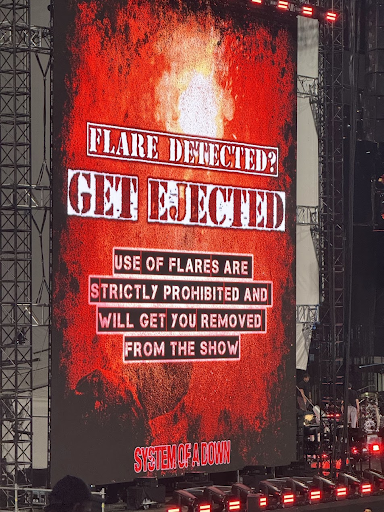
With Avenged Sevenfold’s set concluding, the lights on stage dimmed, and left me full of anticipation for System of a Down’s set. After learning the set times from their Instagram page, I was checking the clock non-stop in anticipation. While waiting, a warning appeared on the screens next to the stage, declaring that flares were not allowed during the show. and violators will be removed. After initially being very confused as to why this warning was needed, I started to research while waiting for the band’s performance. After one quick google search, I found countless articles covering the use of flares during their show, with the most recent occurrence happening at one of their performances in Brazil. Concluding the show, the band issued a statement saying “This is not a war zone, this is not a riot, this is a System Of A Down style Rock & Roll concert in Brazil!”
Concluding this, the Armenian/Californian Metal legends System of a Down’s set finally began, with a majority of the attendees standing up from their seats to witness their performance. They started their set with Soldier Side, a clever homage to the venue’s name, Soldier Field. They then abruptly flew into “B.Y.O.B,” debatably my favorite song by the band, which caught me by surprise as one of the first songs to be played. I immediately stood up from my seat in excitement, happily being able to witness the song live, while witnessing the chaos in the crowd below.
Soon after came plenty of more crowd favorites, such as Prison Song, Aerials, and Needles, all equally firing up the crowd with several mosh pits opening throughout the venue. Proceeding Needles, guitarist Daron Malakian started to make jokes about the chorus of the song, “Pull the tapeworm out of your a**,” which hinted at the crowd for what song was next. After flying through several more of their songs, they finally got to their most popular song, titled “Chop Suey!” with the energy of the crowd hitting a peak, with several more pits breaking open throughout the venue; some mosh pits, some circle pits, and no flares involved!
After reaching the later part of their set, I was torn between witnessing their last few songs, or leaving the venue to beat the crowds. Though I had to regrettably miss the band performing two more of my favorites, “Toxicity” and “ Sugar,” I decided to make their music my soundtrack as I navigated my way out of the stadium. Even though I was completely exhausted after their performance, it was the best kind of tired, having poured out every ounce of my energy during their set.
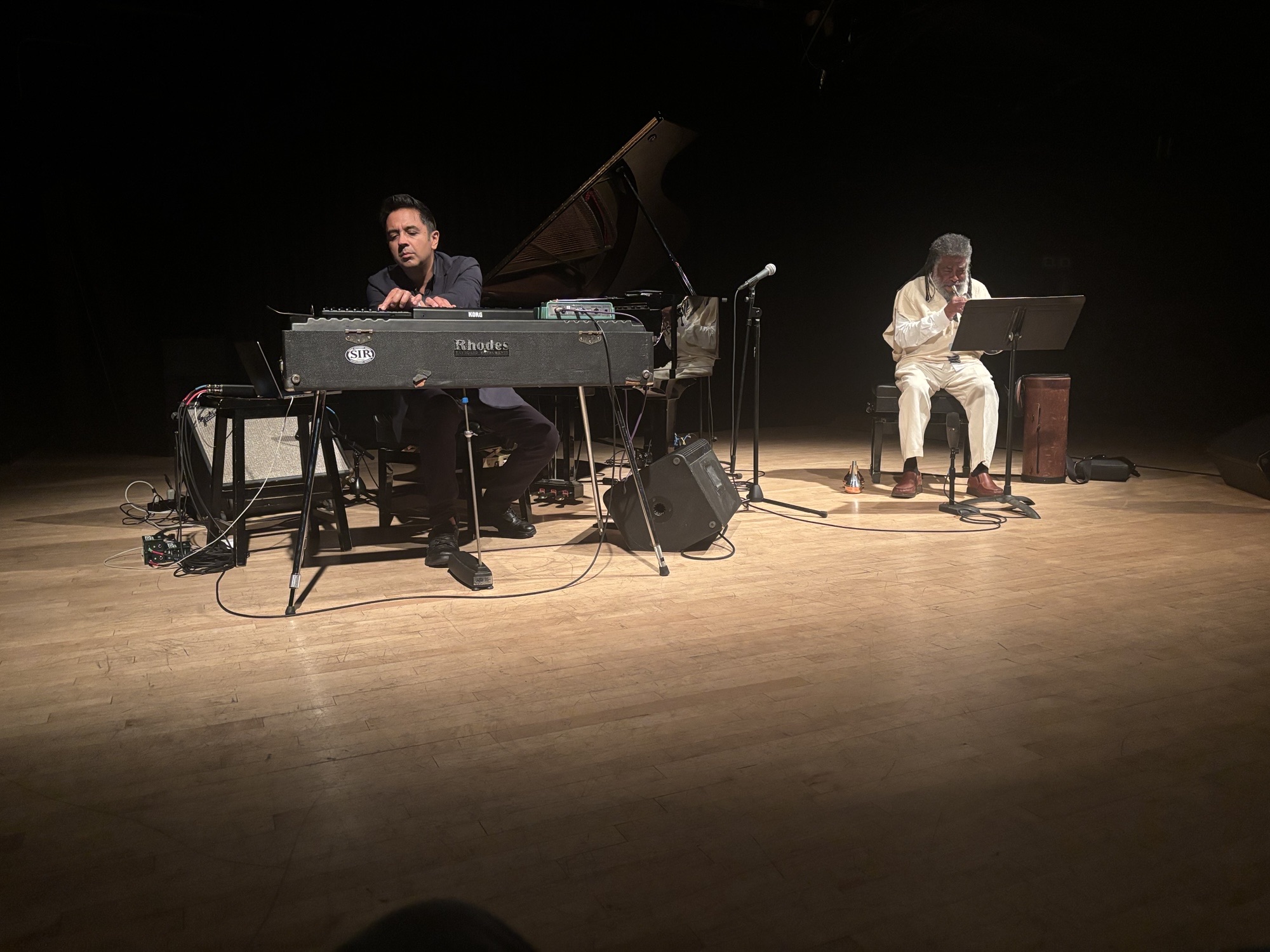
CHICAGO– Friday June 27th at Constellation two titans of forward musical thought Ishmael Wadada Leo Smith- trumpeter composer and Vijay Iyer- pianist and composer graced Chicago with a performance of their second collaboration album “Defiant Life”.
Smith has been a cornerstone of creative music ever since he joined the Association for the Advancement of Creative Musicians in 1967. A true pioneer who has crafted new ways to compose, perform, and improvise. His use of new composition methods not based on western standard notation led to the development of his own composing discipline called “Ahnkramation.” A writing method not focused on tailoring things for only one style at a time but rather creating a musical language that allows for fluidity with which all musicians can navigate to try and connect with themselves and their environment.
Smith, a Pulitzer Prize finalist, has time and time again taken his music and concepts to new heights by bringing creations bursting with his virtuosic gripping sound and ideas.
Iyer is also a musician charged with ideas and musical creation which challenges and drives thought using mathematical sequences to help structure his music. Never has he shied away from truly reforming viewpoints through the theory and approach he uses when writing and performing. Currently teaching at Harvard he continues to help lead the charge in creative music.
Smith and Iyer first worked together in Smith’s Quartet but later came to work together as equal collaborators releasing their first project “A Cosmic Rhythm With Each Stroke” in 2016. For their latest work “Defiant Life” Smith and Iyer have stated in an interview with NPR that the album can be thought of “as a notion of dialogue where you look at the essentials, and you look at the possibilities, and you look at that which is necessary.” When listening and seeing “Defiant Life” be performed live this idea of dialogue blossoms to take your mind and the music into new levels of contemplation, meditation, and actualization.
As both Smith and Iyer sat down it felt as though the room held its breath in anticipation for them to begin. Starting of course with the first track, “Prelude: Survival,” Iyer set the stage with a rich dark texture from the piano. Slowly his volume would rise and fall in a hairpin fashion creating tension for Smith to speak with.
Smith entered with small layers of sound from his horn to accompany Iyer’s growing ideas which started to build out towards small runs in his middle and upper register. Continuing their dialogue, Smith slowly started to incorporate sharper edges in his language before taking a moment for Iyer to play alone. Iyer split his hands between his Grand and Rhodes piano as he slowly moved the audience into almost a dreamlike state with the Rhodes soft tones.
Finally, Iyer reveals his plan as he starts to use one of his other synthesizers to transition into the album’s second track “Sumud” which starts with waves of high pitched frequencies stacked upon one another with a long, drawn out bass tone creating feelings akin to floating in water. On top of this texture Smith creates a prominent line with flows throughout the foreground and background combining strong melodic components and extended techniques to bring out the sound of just his buzzing on the mouthpiece.
Together their conversation shifts to a more direct way of communication with Iyer again on the Rhodes and Smith now pushing out longer periods of speech combined with short shots from his trumpet to build up a varied emotional path. All the while Iyers playing lays down a mixture of consonant beauty, juxtaposed by dissonant ideas of weight. Smith continues this motif with his horn as he starts to quickly run up and down the range of his trumpet before extending to the upper stratosphere of his horn.
Both Smith and Iyer’s speech and ideas intertwined together, drawing the audience into their dialogue of sound. Iyer then again takes the foreground like in the Prelude with a solo, incorporating lines of the jazz idiom and utilizing the reverb of the Rhodes piano to have a canvas on which to paint. Finally, Smith joins Iyer again and both musicians come together in a more reserved fashion which slowly dissipates together before ending with a beautiful chord from Iyer.
The third track “Floating River Requiem” begins with Iyer alone creating a mixture of atmospheres with some truly exquisite voicings on the piano. Pushing feelings of peace mixed with dissonant feeling, Smith was able to sing across the top of this foundation creating another epic of a melody that began as legato tones each one knitted with the next in his story. Slowly both Smith and Iyer came together to build up a mountain of sound gripping the audience in their cascade of notes together before allowing another natural dispersion of the sound into the end of the piece.
As the applause died Smith took the foreground of the fourth track “Elegy: The Pilgrimage.” Utilizing a Harmon mute, Smith was able to again take the use of his sound in a different direction than the last track as he used a series of spaced out melodic ideas, cries, and small bursts of notes. All the while Iyer contributed to this sonic atmosphere with the use of his synthesizers and small use of the piano. Once Iyer did come to the foreground both he and Smith played off each other’s conversation in such a way that still left so much free space for their sound to rest before Iyer wound the track down with a pattern on the lower end of his grand piano. Before starting again with brisk strikes and plunks on his piano while Smith played over top.
Iyer started the penultimate track “Kite (for Refaat Alareer)” on his Rhodes again. Its soft style serves as a striking juxtaposition to the previous vigor, providing a point of difference in the tone and context of this dialogue. Both Iyer and Smith kept their playing in a much softer range here with Iyer using his synths to lay down full low drones as he and Smith seemed to explore this floor of sound. As their playing proceeded Smith, who had started with a Harmon mute took it out and increased his volume with his split up ideas. Iyer started a repetitive rhythmic pattern on his piano which combined with flurries of notes from Smith which made for an experience that drew in one’s full attention.
Before jetting into a revisitation of some previous language from Smith as they wound down this composition. It was here that Smith and Iyer both stood and took a few moments to acknowledge each other as friends, collaborators, and musicians.
Smith gave a few choice words that I felt stuck with me, to paraphrase, he stated that while the world is hard and tumultuous right now, within the space between audience and performing artist,things were ok. That there is a peace which is held within such spaces that cannot be affected by the outside world. In my eyes, I saw it as a beautiful testament to the power of the arts, especially music. Especially in terms of its ability to bring communities together and help heal us.
Once again both musicians sat down for the final track “Procession: Defiant Life,” in this performance it started with precise sporadic playing. Running through the keys by Iyer and blasts of tightly knit notes by Smith, it raised one’s adrenaline while seeing the performance. After a few minutes Smith and Iyer transitioned into a grander wider playing style with Smith expounding a beautifully rich melody as Iyer raised around him a tapestry of sound. One final time they both wound down. First Smith slowed to a stop, leaving Iyer alone to slowly take the track to rest. Finally, both stood to bow after this remarkable performance, two legends sharing their fabulous creation with us.
I highly recommend diving deeper into both Smith and Iyers catalogues as they are filled with amazing work. I suggest trying to catch any of their upcoming performances as they exhibit such amazing musicianship and artistic ability. Both Iyer and Smith truly harness energy you can rarely be in the vicinity of let alone observe in performance. Two titans of the music unlike any others.
CHICAGO – I think it’s a universal experience to have certain artists tied to specific chapters of your life. Whether it’s a breakup, a family event, or just a rough day, music has this incredible way of helping us process it all. I’ve always believed that music heals and nothing reminded me of that more than seeing Spill Tab live at Beat Kitchen on a Saturday night in June.
Claire Chicha, better known as Spill Tab, soundtracked my entire freshman year at DePaul. From move-in day to finals week, she was the artist I turned to. A constant I could fall back on during a year full of change. Her music captured the chaos, the fun, and the growth of that time. I’d get ready for Loop classes to “Splinter,” and wind down at night with “Cotton Candy.” She became the backdrop to my first experiences navigating Chicago, a city that quickly started to feel like home.
Spill Tab was also the first artist I ever saw live in Chicago at Schubas in 2022. Back then, I was a freshly 18-year-old freshman who could barely navigate the CTA and relied on the Student Center for all my needs. Fast forward to now, I’m 21 and heading into my senior year. Watching her again, this time at Beat Kitchen, hit differently. It was nostalgic, emotional, and affirming. A reminder that I’ve made it this far, still doing what I love, chasing live music, finding new meaning in familiar songs, and letting artists like Spill Tab help me write the soundtrack to my story.
On her four-show U.S. tour, Spill Tab delivered a vibrant mix of new tracks and fan favorites. Her stop at Beat Kitchen was nothing short of electric. She opened the set with the high-energy “CRÈME BRÛLÉE!,” immediately pulling the crowd into her world. Claire’s lo-fi vocals and dreamy, genre-blurring melodies transformed the intimate venue into a dance floor, especially as she moved into “Calvaire” and “Velcro.” Whether longtime fans or first-timers, everyone found something to connect to, each song revealing a new layer of her artistry.
What made the night even more memorable was the chemistry between Chicha and her band. Their genuine love for performing was contagious. Between songs, the banter was effortless and hilarious. Before launching into “PINK LEMONADE,” drummer Gabe Tout buttoned up his shirt, joking he was “getting more serious.”
The jokes kept coming, with bassist Caleb Buchanan riffing, “What if we just talked for 45 minutes and gradually got more and more dressed?”
The crowd laughed along, fully in on the inside jokes and off-the-cuff energy. They even shared a story about accidentally hitting a fox with their tour bus, which has not landed at some shows they’ve played, “life is so bad you have to laugh in reference to killing a fox.”
As the set continued, Claire introduced songs from her newest album “ANGIE.” Even the lesser-known tracks landed with impact. Fans shouted the lyrics to “wet veneer” and “Adore Me,” already embracing them like longtime favorites.
One of the most striking moments came when she performed “Assis,” a hauntingly beautiful track sung entirely in French. The room fell silent in awe, proof that language is no barrier when the emotion is real.
Amid all the bits, beats, and playful chaos – including the band joking that they were “cooked after this tour” – Spill Tab closed the night with the explosive 2021 hit “PISTOLWHIP.” Just like the first time I heard it live, it hit with the same raw energy and cathartic release. Fans jumped, danced, and screamed the lyrics, savoring every last moment of a show that moved through so many emotions. It was the perfect finale. Wild, emotional, and truly unforgettable.
Watching Spill Tab again reminded me of why I keep chasing shows, even when life gets chaotic. The night had felt like I had just closed a chapter I didn’t realize was still open. Spill Tab’s music carried me through the start of my college experience, and now, on the edge of my last year, she reminded me why I fell in love with this city, with live music, and with the version of myself that has grown up these past three years in both. Some shows are just concerts, this one felt like a full circle.
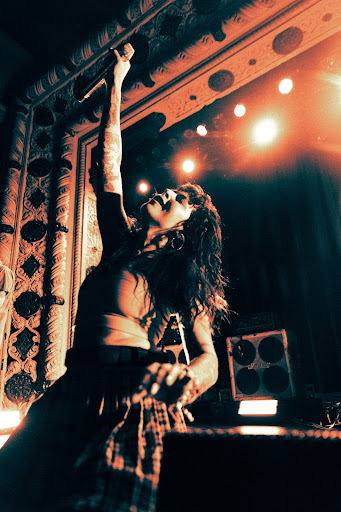
CHICAGO – Whenever I tell people my favorite genre of music is “the kind that makes your head hurt just a little,” they look at me like I’ve lost it. I’m talking about the kind of chaotic, noisy brilliance that sounds like a jumble of chords and distortion, music that would leave the average listener dazed and confused. But on June 12th, that exact kind of energy was the main attraction at Metro. Dressed in color-blocked outfits and bursting with funky energy, Sleigh Bells played to a sold-out crowd for their 2025 tour, delivering a set packed with longtime fan favorites and fresh tracks from their latest release, “Bunky Becky Birthday Boy.”
Picture taken by Lilly Helling.
The night kicked off with alternative pop-rap artist Sophie Hunter, who instantly had the crowd buzzing. The Brooklyn-based performer had icon status from the start, spitting original tracks like “Cha Cha” and “Mic Check,” along with a freestyle. I could just tell she was cool from the moment she stepped on the stage, and she set the tone perfectly for what was to come.
Then it was time for the main event, Alexis Krauss and Derek E. Miller of Sleigh Bells. Backed by their band, they stormed the stage with “Badly,” and the crowd lost it. This marked Sleigh Bells first tour since 2022, and you could feel the anticipation explode within the first notes. The group had played Metro before and the crowd gave them the warmest welcome back.
Noise pop ricocheted through the venue, and the audience responded with full-body movement. Heads banging, feet stomping, bodies jumping in unison. “Riot Rhythm” found fans high off the ground, letting the music take over. The crowd knew to give Kraus and Miller all the energy they had.
What stood out most wasn’t just the sound, it was the connection. Sleigh Bells didn’t just perform. They engaged. Krauss and Miller made it a point to reach for fans’ hands between songs, flashing grateful smiles and thanking the front-row diehards pressed against the barricade. Their excitement to be back on stage was contagious, radiating from every scream, every chord, every shared moment with the crowd. Krauss even shared that she had a blast creeping on fans before the show who were camped out on Clark street.
Picture taken by Lilly Helling.
Before launching into the metal pop hit (and one of my personal favorites) “Bunky Pop,” Krauss shared her Chicago show ritual. In past tours, she’d start the day with a walk to Montrose Beach, soaking in the lakefront vibes with her beloved dog, Rizz. But this time was different. After Rizz’s recent passing, Krauss made the solo trip alone, and dedicated the performance of “Bunky Pop” to him.
They then jumped into a throwback melody from their first works, The band threw it back with “Kids,” a gritty anthem from their debut album. Without missing a beat, Krauss and Miller jumped into the pit, surrounded by fans screaming every word. This was followed by explosive performances of “Locust Laced” and “Comeback Kid.” For longtime fans, it was a rush of nostalgia. For newcomers, a thrilling introduction to the band’s early roots.
As the night came to a close, the duo told the crowd to let everything go. To lose themselves in the moment during their most iconic track, “Rill Rill.” The room erupted. Krauss dove into the crowd, leading the whole venue, from the mosh pit to the back of the balcony, to come alive. Hair whipped, arms flailed, and no one held back.
The show made my love for turbulent and chaotic music so validated. Watching Sleigh Bells sprint across the stage, shredding through their set with infectious joy, reminded me exactly why I keep coming back to noise pop. It’s not just about the sound – it’s about the feeling. The way volume, distortion, and aesthetic collide to create something electric. Sleigh Bells didn’t just perform their music on June 12th at Metro. They embodied it.
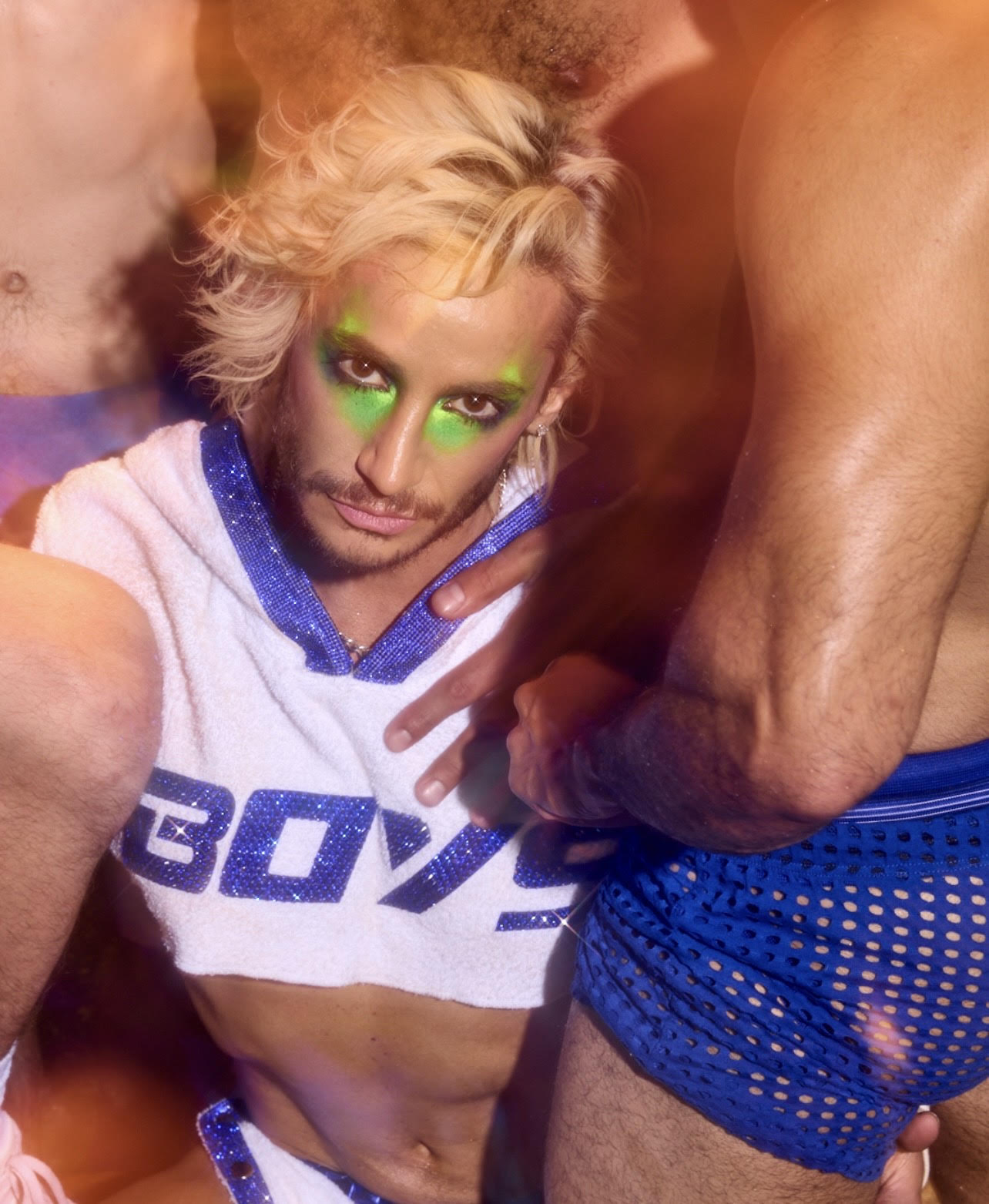
CHICAGO– On June 3rd, 2025 I had the insane opportunity to be invited to my first press conference with Frankie Grande through 1824. This call was all about the release of his debut album “Hotel Rock Bottom” which comes out on June 27th. Grande is stepping into his musical persona and is incredibly eager to hit the ground running.
This album chronicles many different stories in Grande’s life. The song “Oasis” is about his husband being his own oasis in a harsh world. “Boys” celebrates queer and gay joy in the men’s locker room, a historically hypermasculine place. It is evident he pours his heart and soul into everything he does, whether it be through the medium of dance, music, or advocacy. Grande collaborated with an STD testing service called MISTR on his music video for “Boys,” to help bring awareness of the importance of STD testing.
“It is half art and advocacy.” Says Grande as he describes his career. “I don’t think I can actually separate the two.”
For decades, art and social movements have been effortlessly intertwined. The art we create imitates life and the world around us.
Grande wants to make the world a more equitable place for everyone, no matter who you are. “It’s ok to be exactly as you are.” He says.
Being a musician and a creative person is no easy feat. Grande explains this struggle by saying “Discovering my sound as a recording artist was very difficult for me. Music sonically dictates the story (of my album).”
He also talked about how difficult it is not to get too burnt out in the music industry by saying This industry is sucking me completely dry. Balancing life and having time for yourself is very important.”
I am excited to see Frankie continue to perform all around the country while being his beautiful authentic self.
If you have any form of social media or if you’re watching “Love Island USA,” you probably heard someone casually say the phrase “what the helly?”
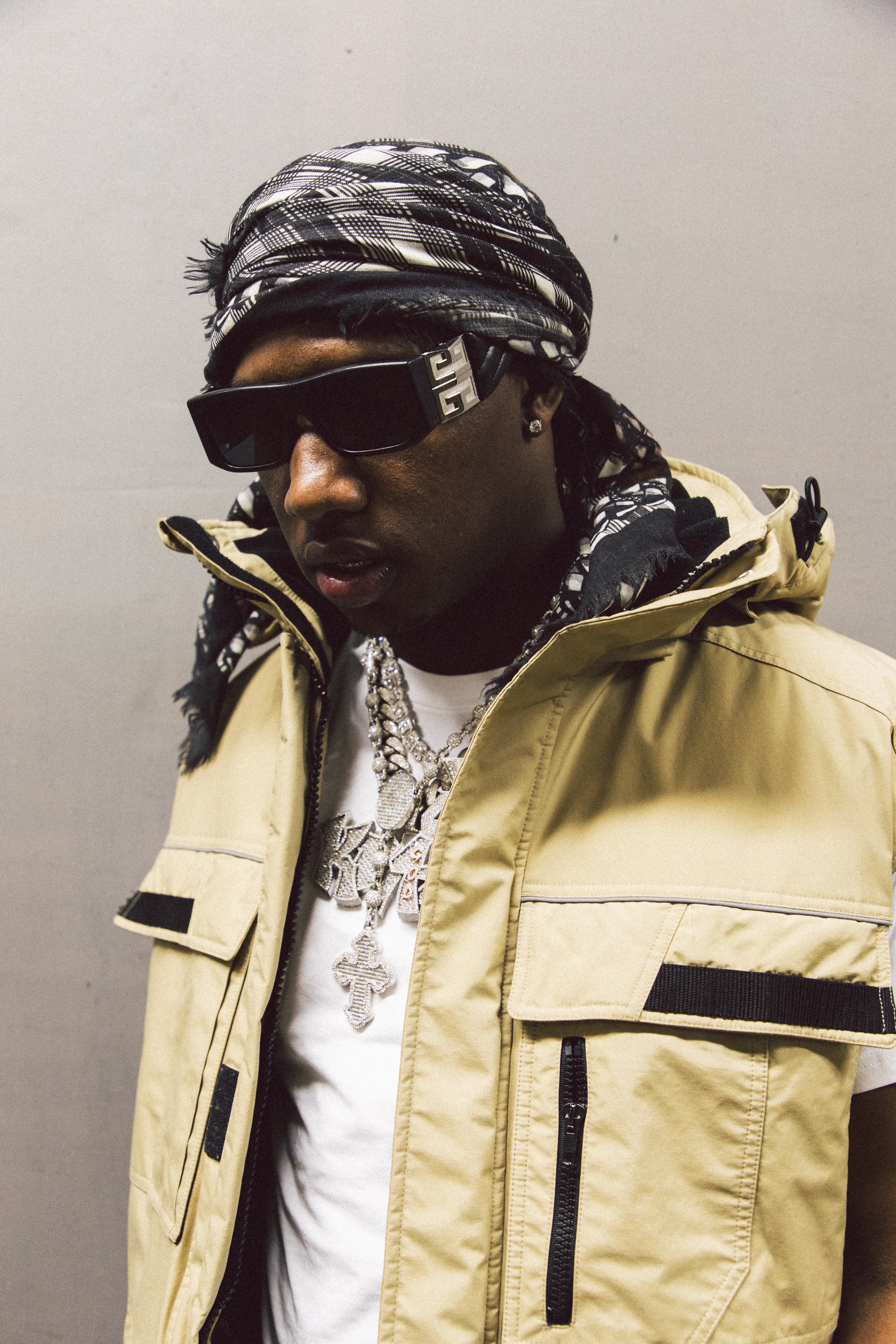
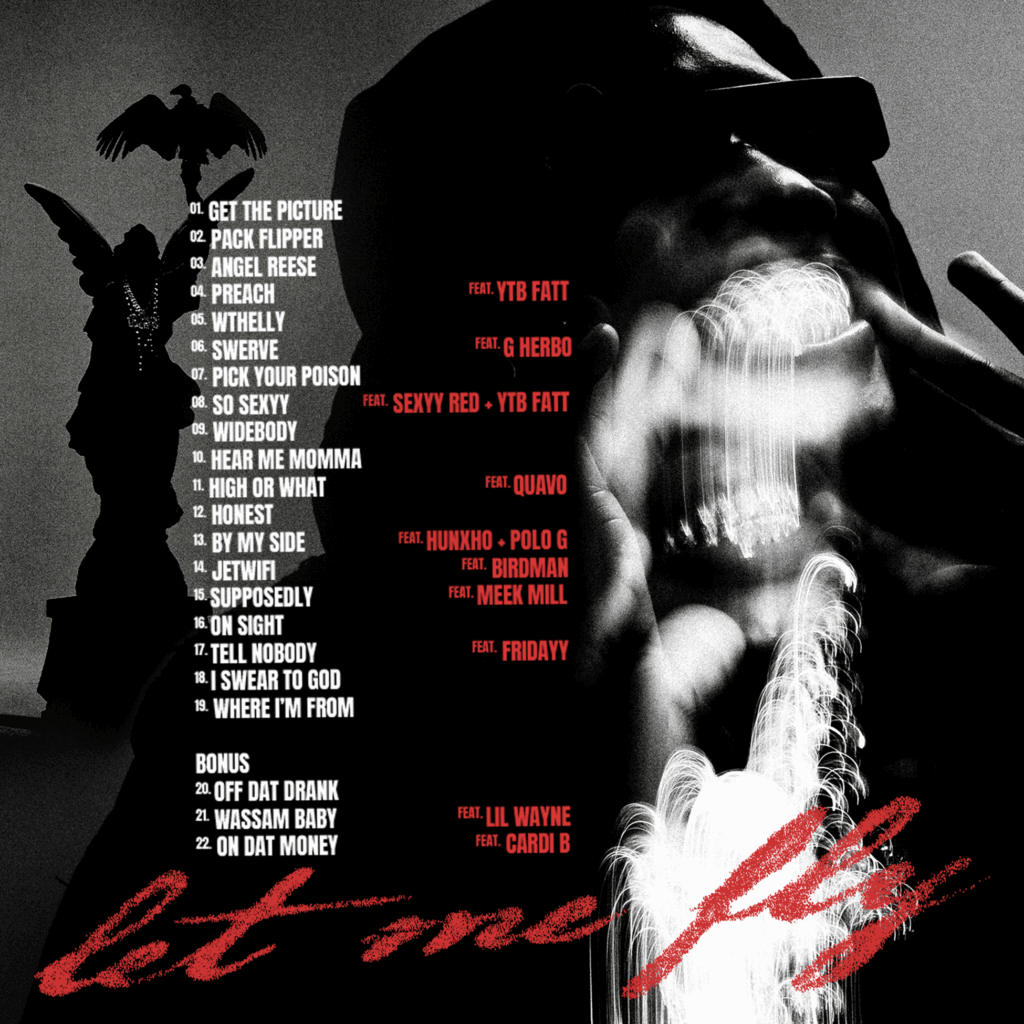
“WTHELLY” by Rob49 has taken the world by storm – from TikTok trends to become a regular quote, Rob49 said he knew this sort of outcome was on the way.
“I knew that’s what it was gonna be,” Rob said. “I remember telling them, my label, this is going to be this, this is how they gonna make the TikToks.”
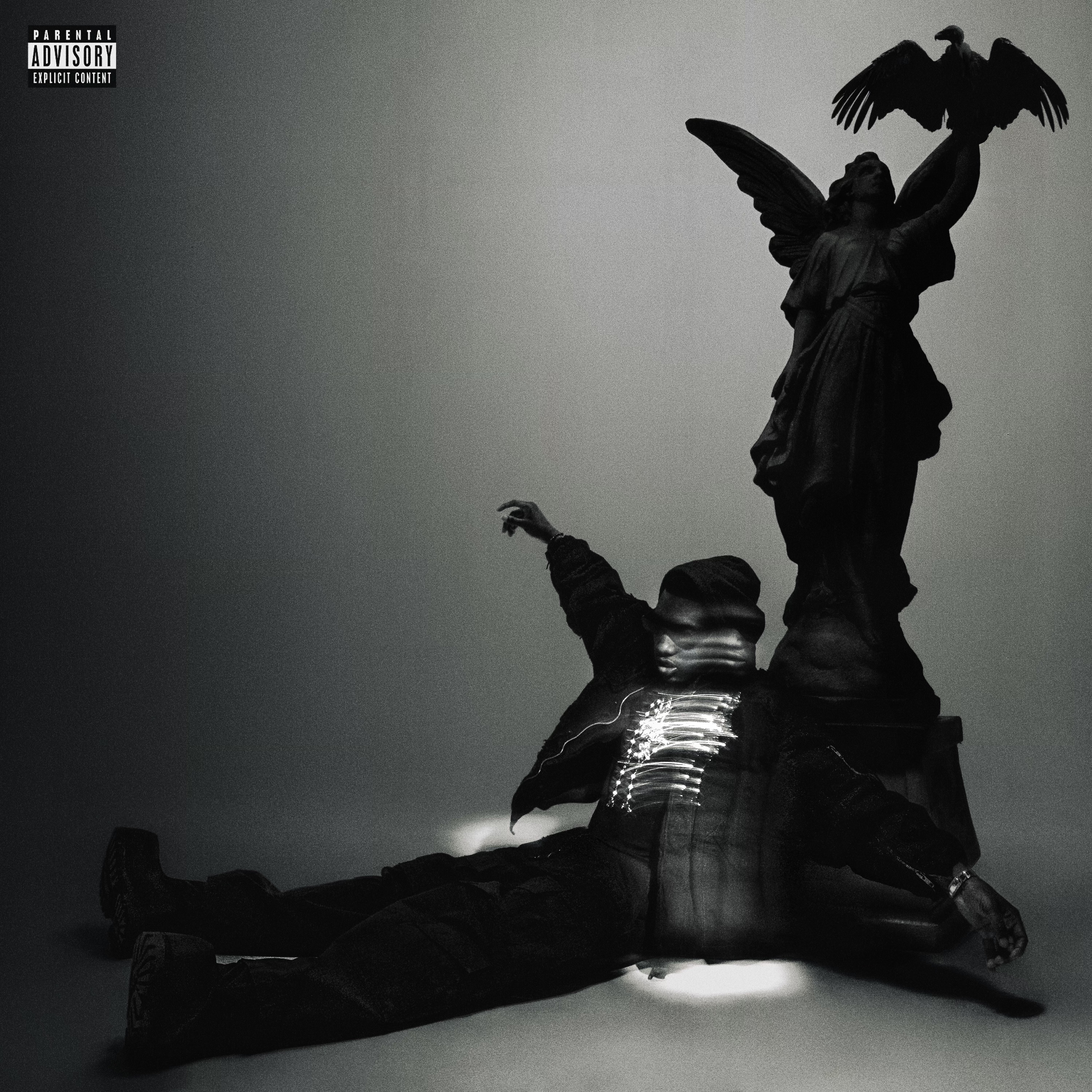
Rob49 is a NOLA native, who takes inspiration from artists like The Notorious B.I.G., Slick Rick, Lil Wayne, and jazz bands. Last month, he released his album “Let Me Fly,” which comes from a motivational phrase in Rob49’s life. Coming from drumming on buckets in the French Quarter, he says “WTHELLY” is only the start of what’s to come.
“I think I’m so past this album,” he said. “It’s like jumping in the pool compared to jumping in the ocean, like, I’m trying to jump in this ocean with this.”
Rob49 is not a shy man. He’s open and straight-up, and it’s every journalist’s dream to hear so much honesty.
“Y’all can ask me whatever y’all want, y’all ain’t gotta ask me no simple question that any other blog will ask,” Rob49 told the press conference.
He even took a moment to shout-out one of the interviewers about making music.
“I wanna collaborate with all the young people coming up,” he said. “The youngins is what it is.”
I asked Rob about what kind of impact he hopes comes out of this album, and he said it’s plain and simple.
“It’s funny because I just want them to hear this and accept everything I drop after it,” he said. “Just enjoy yourself, don’t think about it too much.”
“Let Me Fly” came out on May 23, and there is much more to come!
“This is just the beginning of the growth,” Rob said. “It’s that fast, it’s like, now what?”